Understanding the Injection Molding Machine Technology
In the realm of manufacturing, the Injection Molding Machine stands as a cornerstone, revolutionizing how industrial components are produced. These sophisticated machines are pivotal in converting raw materials into intricate plastic products that meet various market demands. With advancements in technology, modern injection molding machines offer enhanced efficiency, precision, and adaptability to diverse manufacturing processes.
What is an Injection Molding Machine?
An injection molding machine is designed to produce parts by injecting molten material—often plastic—into a mold. This process allows for mass production of high-quality components with complex geometries. Injection molding machines are employed across various industries, from automotive to consumer goods, due to their capability to produce consistent and durable products rapidly.
The Components of Injection Molding Machines
Understanding the components of an injection molding machine can help users optimize its functionality. Key components include:
- Injection Unit: This is responsible for melting the raw material and injecting it into the mold under high pressure.
- Clamping Unit: This secures the mold during the injection process and opens it for part removal.
- Control System: Modern machines feature computerized systems for accurate monitoring and control of the injection process.
- Mold: The mold shapes the injected material into the desired product.
How Injection Molding Works
The injection molding process begins with feeding raw plastic pellets into a heated barrel. The pellets are melted into a viscous liquid, which is then injected into a pre-shaped mold under extreme pressure. Once cooled, the mold is opened, and the finished product is ejected. This method allows for uniformity and precision, making it ideal for producing intricate designs and large quantities.
Key Features of Electric Injection Molding Machines
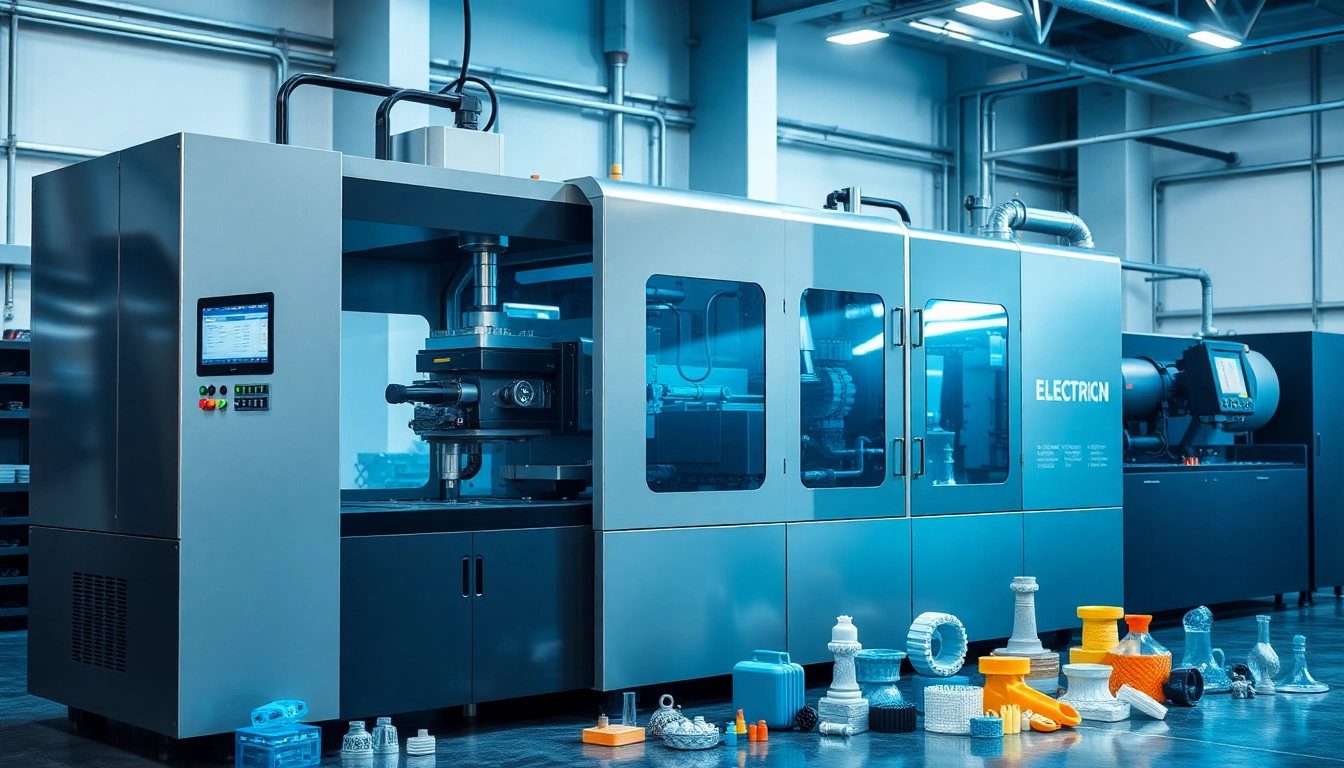
Electric injection molding machines have gained popularity due to their superior precision and efficiency. They incorporate advanced technologies that enhance operational performance while minimizing energy consumption. Here are several key features:
Precision Control and Discrete Intelligent Drive
One of the standout features of electric injection molding machines is their discrete intelligent drive control. This technology significantly improves the accuracy of both position and pressure control, ensuring higher consistency in product output. Electric systems frequently offer faster cycle times, leading to increased productivity.
Integration with Peripheral Equipment
Modern injection molding machines can coordinate seamlessly with peripheral equipment, such as robotic arms and auxiliary systems used for material handling and part removal. This integration fosters an automated workflow that enhances production efficiency and reduces labor costs.
Benefits of All-Electric Systems
All-electric injection molding machines offer several advantages over their hydraulic counterparts, including:
- Energy Efficiency: Electric machines use significantly less energy as they eliminate the need for hydraulic systems, which consume more power.
- Lower Maintenance: With fewer moving parts and no hydraulic fluids, electric machines require less maintenance and servicing.
- Reduced Noise Levels: Electric machines operate quietly, creating a more pleasant work environment.
Comparing Different Injection Molding Machine Series
When selecting an injection molding machine, it's essential to evaluate the unique specifications and features of various models. This section will focus on three prominent series offered by Topstar: TEII, TMII, and TH series.
TEII Series: Electric Injection Solutions
The TEII series consists of all-electric injection molding machines with clamping forces ranging from 90T to 460T. These machines feature high-rigidity templates that stabilize products and protect molds effectively. A modular design adapts to various operational conditions, while optional linear rail support enhances movement efficiency. The TEII series embodies the integration of cutting-edge technology and user-friendly interfaces, ensuring ease of use and maintenance.
TMII Series: Servo-Driven Innovations
The TMII series introduces servo-driven injection molding machines, available in clamping forces from 90T to 470T. They incorporate advanced technology that allows for the linkage of a single control interface across multiple devices. Features such as automatic compensation for mold opening and real-time feedback enhance precision and control. This series excels in producing dense plastic parts with complex designs in a single operation.
TH Series: Direct Press Type Efficiency
The TH series caters to both small and large-scale production requirements, featuring standardized clamping and injection platforms. Its two-plate direct pressure center clamping structure maximizes mold opening strokes and is perfect for producing large-format, deep-cavity products. The series is also well-suited for automatic part-picking applications, making it versatile in digital manufacturing settings.
Maximizing Efficiency in Manufacturing with Injection Molding
Achieving optimal efficiency with injection molding machines involves strategic operations and performance measurements. The following best practices can help in that pursuit.
Best Practices for Operating Injection Molding Machines
To maximize the output of injection molding machines, consider the following best practices:
- Regular Maintenance: Routine maintenance checks prevent mechanical failures and ensure that the machinery remains in peak condition.
- Optimized Machine Settings: Adjusting parameters like temperature and pressure according to material specifications can prevent defects and enhance product quality.
- Operator Training: Ensuring that operators are adequately trained on machine functionality and troubleshooting can reduce downtime and increase productivity.
Measuring Performance and Output Quality
To ensure the consistent quality of molded products, it is crucial to adopt performance metrics. Key performance indicators (KPIs) might include:
- Cycle Time: Monitoring how long each cycle takes can help identify inefficiencies.
- Defect Rates: Keeping track of the number of defective parts produced can indicate issues in the molding process.
- Machine Utilization: Assessing how often machines are in operation versus idle time can help optimize production schedules.
Common Challenges and Solutions in Injection Molding
While injection molding offers many benefits, challenges can arise. Common issues include:
- Inconsistent Product Quality: Variability in input materials or machine settings can lead to defects. Solution: Establish strict quality control measures.
- Long Lead Times: High demand can create bottlenecks. Solution: Employ multiple machines and streamline workflows to manage increased production rates.
Future Trends in Injection Molding Machinery for 2025
As we look forward to 2025, several trends are expected to shape the future of injection molding technology.
Emerging Technologies in Injection Molding
Advancements in technology will continue to influence injection molding machines significantly. Key trends include:
- Smart Manufacturing: Integration of IoT devices to monitor machine performance in real-time will become standard.
- 3D Printing Interfaces: Hybrid systems that combine traditional molding processes with 3D printing capabilities will gain traction.
Sustainability and Energy Efficiency Innovations
As environmental concerns gain prominence, the industry will shift towards more sustainable practices. Expect to see:
- Biodegradable Materials: Increasing use of eco-friendly polymers in the injection molding process.
- Energy Recovery Systems: Innovations that allow machines to harness energy from the injection process for subsequent cycles.
Predictions for the Injection Molding Industry
The injection molding industry is poised for growth, fueled by the demand for customization and rapid prototyping. As manufacturers seek to differentiate their products, the focus will be on producing high-quality components at unprecedented speeds. Consequently, investments in advanced injection molding technologies will become essential for remaining competitive in the market.
In conclusion, the evolution of injection molding machines, particularly electric models, underscores the industry's commitment to efficiency and sustainability. By embracing technological innovations and adhering to best practices, manufacturers can optimize their operations significantly in the coming years.